Florida's Best PoolsTraining Academy
Pillar guide · 5 articles

Pool Technician Resources: Training, Certification, and Business

Whether you're starting your first route or scaling a crew, this pillar covers the skills, credentials, and business fundamentals of running a pool service in Florida.

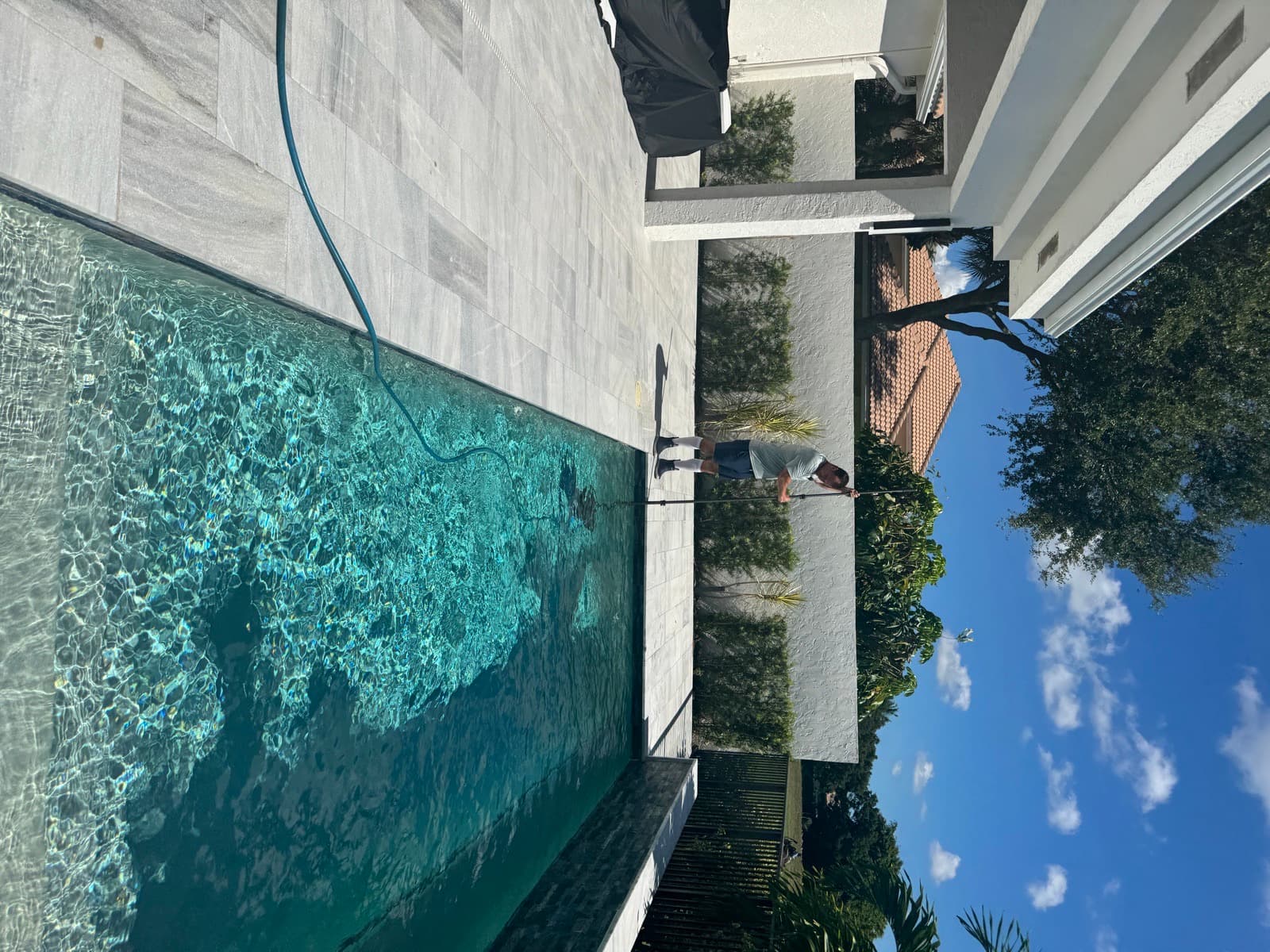
For Pool Technicians — ambient photo

This pillar is for pool technicians — whether you're breaking into the trade, scaling your first route, or trying to move from $40/hr labor into $120/hr operator territory. The techniques are the same as the homeowner guides; the business and licensing side is what changes.

The three levers of a profitable pool business

  1. Route density. Stops per hour, not stops per day. 6 stops within a 3-mile radius beats 8 stops across 15 miles every time.
  2. Pricing discipline. Flat monthly, chemicals included. The hourly race-to-the-bottom is a trap.
  3. Diagnostic revenue. The tech who can quote a pump swap during the weekly visit earns 3x the tech who only does cleaning.

Licensing in Florida, simplified

  • Pool cleaning only (no repairs): County occupational license is usually sufficient.
  • Repairs and equipment work: Registered Pool Servicing Contractor (RP) with DBPR.
  • New construction or plumbing: Certified Pool Contractor (CPC) — harder exam, broader authority.
  • Commercial accounts: Certified Pool Operator (CPO) certification through PHTA.

Guides for technicians

All guides in this pillar

6 min read
CPO Certification

What the CPO covers, how to prepare, and the commercial accounts you unlock with it.

Read guide →
7 min read
Pool Technician Tools

Exactly what we carry on every route truck — from test kits to torque wrenches — and the upgrades worth the money.

Read guide →
8 min read
Building a Pool Route

Route density, pricing psychology, and the revenue-per-hour framework that separates $40/hr techs from $120/hr operators.

Read guide →
6 min read
Florida Pool Contractor Licensing

When you need a state license, when a county occupational license is enough, and the DBPR categories.

Read guide →
7 min read
Union and Glue Joint Repairs

Primer, cement, cure times, and the five failure modes you see on other techs' work.

Read guide →
Related pillars

Keep exploring

Pool Water Chemistry

Master pH, chlorine, alkalinity, CYA, and hardness. The single most important skill for clear, safe water.

Pool Cleaning & Maintenance

Skim, brush, vacuum, and service your filter. A disciplined weekly routine prevents 90% of pool problems.

Troubleshooting Pool Problems

Cloudy water, algae, stains, foaming — every problem has a cause. Here's how pros diagnose and fix them.

Pool Equipment

Understand what every piece of your equipment pad does — and how to get more years out of it.

Pool Safety

Florida pool safety standards, VGB drain covers, fencing code, and the emergency response every operator should know.

Florida Pool Care

Hurricane prep, year-round operation, hard water, screen enclosures, and the challenges unique to Florida.

Spa & Hot Tub Care

Spas are not small pools. Higher temps, smaller volume, higher bather load — different rules.

Pool Math & Calculations

Pool volume, chemical dosage, and breakpoint math. The numbers behind every safe, correctly-dosed pool.

Disinfection Theory & Chemistry

The HOCl vs. OCl equilibrium, CT values, and disinfection by-products. The science every CPO-level operator needs to know.

Recreational Water Illness (RWI) Prevention

Cryptosporidium, fecal incident response, and the RWIs that close pools. The CDC-compliant playbook.

Pool Hydraulics & Circulation

Turnover rate, total dynamic head, cavitation, suction entrapment, and the physics of making water move through a pool.

Filtration Engineering

Filter media rate, micron ratings, sand vs. cartridge vs. DE, and what filters can and can't actually remove.

Commercial Pool Operations

Chemical feeders, ORP/pH controllers, pool heating, indoor air quality, and the electrical safety every commercial operator needs.

Compliance, Codes & Standards

The MAHC, ANSI/APSP/ICC standards, ADA accessibility, and the federal alphabet soup of pool regulation.

Florida Pool Licensing & Regulations

Every Florida pool license explained in plain English — what each one lets you do, how to get it step-by-step, and which counties make it harder.

Pool Plaster Startup & New Builds

New plaster has a 30-day chemistry window. Do it right and the surface lasts 15–20 years. Do it wrong and you're looking at etching, scaling, and a warranty void.

Records & Risk Management

Required daily logs, incident reporting, operator duty of care, and the documentation that defends you in court.

Ready for a pool that takes care of itself?

Get a quote from our team. No pushy sales calls — just a clear price and a start date.

Request a Service QuoteSee Services